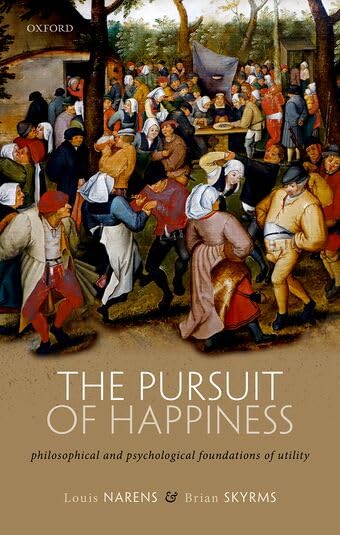
The Pursuit of Happiness: Philosophical and Psychological Foundations of Utility
The Pursuit of Happiness examines the philosophical and psychological foundations of utility and utilitarianism. Louis Narens and Brian Skyrms combine formal and historical approaches to questions about measuring utility and comparing it between people.
At a glance
- Explores how utility can be measured and how group utility can be understood.
- Follows theories from Jeremy Bentham through psychophysics, measurement theory, neuropsychology, and representation theorems.
- Considers interpersonal comparisons and convention formation as ways to coordinate social action.
Reference price: $37.95
Price checked: Nov 27, 2026
View offerBlack Friday weekExplore the selectionPros and cons
Pros
- Connects philosophical arguments about utilitarianism with psychological and formal approaches to measuring utility.
- Covers historical foundations as well as possible directions for developing utilitarian thought.
Who is it for?
A good fit for
- Readers interested in utilitarianism, ethics, and social choice.
- Readers seeking a formal and historical discussion of utility measurement and interpersonal comparison.
Customer reviews on Amazon
- 5 stars
62% 62% - 4 stars
38% 38% - 3 stars
0% 0% - 2 stars
0% 0% - 1 star
0% 0%
The supplied material includes aggregate ratings but no customer comments or rating count. The rating distribution is favorable, though it cannot show which arguments or topics readers valued. Prospective readers should use the book description to judge whether its formal and historical treatment of utility suits their interests.
Frequently asked questions
What does this book examine?
It examines the foundations of utilitarianism, focusing on how utility can be measured and how utility across people or groups can be understood.
Which approaches does the book use?
The description says Louis Narens and Brian Skyrms use formal and historical methods, covering topics including psychophysics, measurement theory, neuropsychology, and convention formation.
Who may find this book relevant?
It may interest readers studying utilitarian ethics, utility measurement, interpersonal comparison, or the relationship between philosophy and psychology.