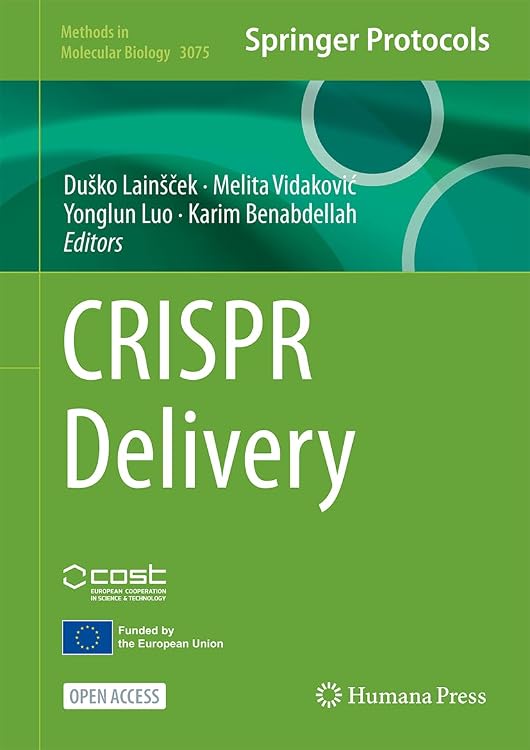
CRISPR Delivery (Methods in Molecular Biology, 3075)
CRISPR Delivery is a Methods in Molecular Biology volume covering genome-editing delivery approaches and laboratory protocols. It surveys viral vectors, lipid nanoparticles, electroporation, extracellular vesicles, and other synthetic carriers, with chapters that include materials, step-by-step methods, and troubleshooting guidance.
At a glance
- Covers viral delivery systems including lentiviral, adenoviral, and AAV vectors alongside non-viral options.
- Topics include lipid nanoparticles, electroporation, extracellular vesicles, and synthetic carriers.
- Chapters are described as including materials and reagents, reproducible protocols, and troubleshooting tips.
Reference price: $59.99
Price checked: Nov 24, 2026
View offerBlack Friday weekExplore the selectionPros and cons
Pros
- Offers a broad survey of viral and non-viral CRISPR delivery approaches in one volume.
- Protocol-focused chapters may help readers looking for practical methods as well as background on delivery platforms.
Technical specifications
8 specifications| Publisher | Humana |
|---|---|
| Publication date | September 23, 2026 |
| Language | English |
| Print length | 440 pages |
| ISBN-10 | 1071655469 |
| ISBN-13 | 978-1071655467 |
| Weight listed | 2.15 pounds |
|---|---|
| Dimensions | 7 x 1 x 10 inches |
Who is it for?
A good fit for
- Researchers and students studying CRISPR delivery methods.
- Laboratory professionals seeking protocols across viral and non-viral delivery approaches.
- Readers who want coverage of genome-editing delivery platforms rather than a general introduction to genetics.
Less suited to
- Readers seeking a general-audience introduction or a non-protocol-focused overview.
Frequently asked questions
What delivery methods does this book cover?
The listing describes viral vectors such as lentiviral, adenoviral, and AAV systems, plus lipid nanoparticles, electroporation, extracellular vesicles, and other synthetic carriers.
Does it include laboratory protocols?
The listing says chapters include materials and reagents, step-by-step protocols, and troubleshooting guidance.
Who is the book aimed at?
The described audience includes researchers, clinicians, students, and industry professionals working on CRISPR delivery and its translation.