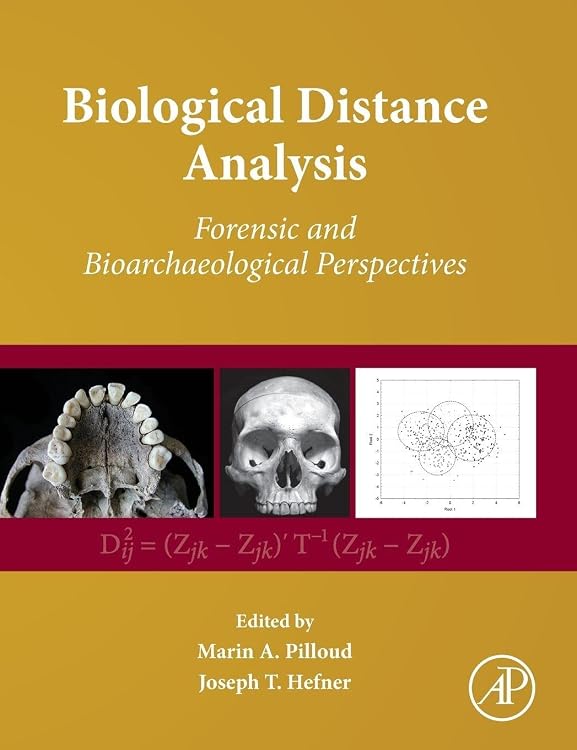
Biological Distance Analysis: Forensic and Bioarchaeological Perspectives
Biological Distance Analysis: Forensic and Bioarchaeological Perspectives brings together methods and research on biological distance analysis across forensic anthropology and bioarchaeology. Its three sections cover datasets and methods, individual-focused forensic applications, and population-based archaeological approaches.
At a glance
- Introduces the field's history and outlines datasets and methods used in biological distance analysis.
- Covers individual-level approaches in forensic contexts, including ancestry estimation and case studies.
- Explores population-based bioarchaeological methods with examples from archaeological samples.
- Describes statistical programs and datasets, and includes an appendix of additional resources.
Reference price: $99.95
Price checked: Nov 23, 2026
View offerBlack Friday weekExplore the selectionPros and cons
Pros
- Combines forensic anthropology and bioarchaeology perspectives in one reference.
- Pairs methodological coverage with case studies and population-based examples.
- Includes an index and an appendix of resources for further work.
Technical specifications
9 specifications| Publisher | Academic Press |
|---|---|
| Publication date | August 11, 2016 |
| Edition | 1st |
| Language | English |
| Print length | 518 pages |
| ISBN-10 | 0128019662 |
|---|---|
| ISBN-13 | 978-0128019665 |
| Weight listed | 2.76 pounds |
|---|---|
| Dimensions | 7.75 x 1.25 x 9.25 inches |
Who is it for?
A good fit for
- Researchers and advanced students seeking an overview of biological distance analysis methods and datasets.
- Readers interested in forensic anthropology, ancestry estimation or bioarchaeological population studies.
Less suited to
- Readers looking for a general introductory biology text or a practical guide outside biological distance analysis.
Customer reviews on Amazon
- 5 stars
73% 73% - 4 stars
27% 27% - 3 stars
0% 0% - 2 stars
0% 0% - 1 star
0% 0%
Aggregate ratings lean positive, with ratings reported in the four- and five-star categories. The sample is small and provides no comments explaining what readers valued or where the book may fall short, so it cannot establish how well its methods or examples meet a particular reader's needs.
Frequently asked questions
What topics does this book cover?
It covers biodistance datasets and methods, individual-focused forensic applications such as ancestry estimation, and population-based bioarchaeological approaches.
Does it include case studies and research resources?
The listing describes case studies, an index, and an appendix with additional resources for biological distance analysis.
Who is this reference intended for?
Its subject matter is aimed at readers working or studying in forensic anthropology and bioarchaeology, particularly those interested in biodistance methods.
Alternative options
Praxis Biology (5236) Exam Mastery: Cut Through the Complexity with Focused Content, Precision Strategies, High-Yield Review and 450 Q&As with Detailed Explanations (3 Full-Length Tests)
$39.27
New York Regents Exams: Life Science: Biology 2026-2027: Study Companion for Cell Processes, Genetics, Ecology, and Human Systems
$19.99

Unofficial AP Biology Prep 2026: 1100 Practice Questions with Detailed Explanations & Answer Rationales, Covering Molecular Biology, Genetics, Evolution, Ecology and Physiology
$29.99

A History of Biology
$13.99
Generative Biology in Plain English: How Scientists Are Designing Proteins, Cells, and Organisms From Scratch (Engineering Life)
$32.99
Bioanthropology: The Basics
$19.96
Ethical Dimensions in the Health Professions
$80.99
Cellular Physiology and Neurophysiology: Mosby Physiology Series (Mosby's Physiology Monograph)
$45.99
Pathology Case Reports: Beyond the Pearls
$38.99
Study Guide for Gould's Pathophysiology for the Health Professions
$42.07
Introduction to Research for Midwives
$39.99

Introduction to Research in the Health Sciences
$55.99