How Can the Human Mind Occur in the Physical Universe?
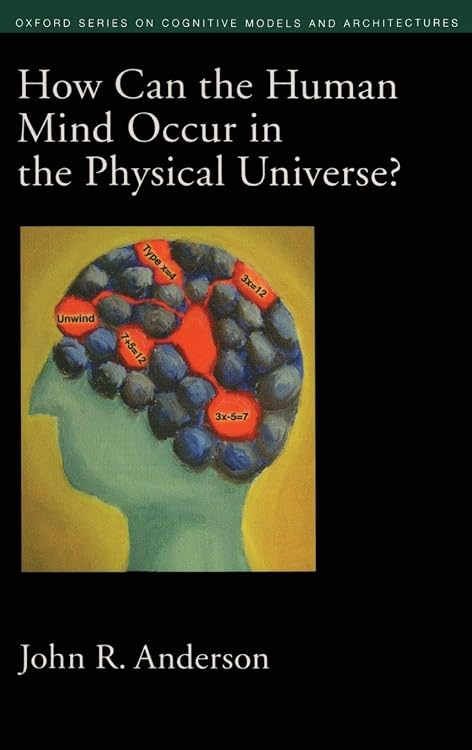
How Can the Human Mind Occur in the Physical Universe? by John Anderson presents an account of cognition organized around the ACT-R architecture. It focuses on declarative and procedural systems and connects cognitive science research with brain imaging.
At a glance
- Organizes its explanation of cognition around the ACT-R architecture.
- Discusses declarative memory and procedural systems, including how they may contribute to different behaviors.
- Relates cognitive architecture to research across cognitive science, including brain imaging.
Reference price: $105.00
Price checked: Nov 23, 2026
View offerBlack Friday weekExplore the selectionPros and cons
Pros
- Offers a focused treatment of ACT-R rather than a general introduction to all cognitive science.
- The 304-page text covers both theoretical architecture and examples such as driving and algebra problem-solving.
Cons
- Its focus on Anderson’s ACT-R account may be too narrow for readers seeking a broad survey of competing cognitive architectures.
Technical specifications
9 specifications| Publisher | Oxford University Press |
|---|---|
| Publication date | August 17, 2007 |
| Edition | 1st |
| Language | English |
| Print length | 304 pages |
| ISBN-10 | 0195324250 |
| ISBN-13 | 978-0195324259 |
| Weight listed | 1.24 pounds |
|---|---|
| Dimensions | 9.2 x 0.9 x 6 inches |
What to know before buying
- The description presents the book as a detailed account of cognitive modules, with particular emphasis on declarative and procedural systems, so readers seeking a primarily practical guide may find its scope more theoretical.
Who is it for?
A good fit for
- Readers studying cognitive science, cognitive psychology, or theories of mind.
- Readers interested in ACT-R, memory and procedural cognition, or links between cognitive models and brain imaging.
Less suited to
- Readers seeking a broad comparison of cognitive architectures or a hands-on workbook.
Customer reviews on Amazon
- 5 stars
57% 57% - 4 stars
8% 8% - 3 stars
23% 23% - 2 stars
12% 12% - 1 star
0% 0%
The supplied evidence includes aggregate ratings but no review-summary evidence, so specific reader-reported strengths or criticisms cannot be identified. The rating distribution is mixed, which offers limited guidance about how well the book’s ACT-R-centered, theoretical approach suits individual readers.
Frequently asked questions
What is this book about?
It presents John Anderson’s account of how cognition can be understood through the ACT-R architecture, emphasizing declarative and procedural systems.
Does the book discuss brain research?
Yes. The description says it brings in research from cognitive science, including work on how brain imaging maps onto cognitive architecture.
What are the publication details?
The listing gives Oxford University Press as publisher, an August 17, 2007 publication date, a first edition, English language, and 304 pages.
Alternative options
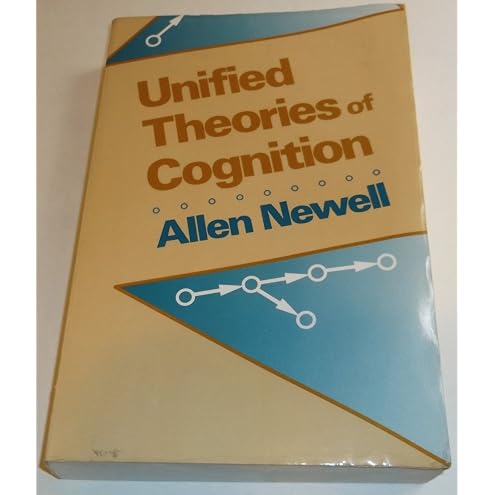
Unified Theories of Cognition (The William James Lectures)
$48.90
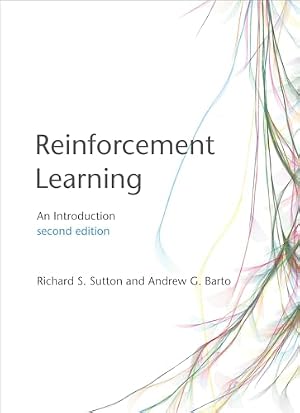
Reinforcement Learning, second edition: An Introduction (Adaptive Computation and Machine Learning series)
$74.10
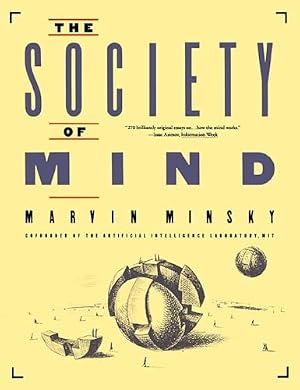
The Society of Mind
$11.75
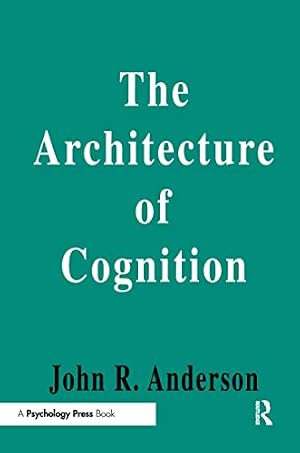
The Architecture of Cognition
$62.24
Principles of Neural Science, Sixth Edition
$150.70
The Soar Cognitive Architecture (Mit Press)
$50.00

The AI Symposium
$18.99
Quantum Information: A First Course
$50.98

A Student's Guide to the Laws of Thermodynamics
$25.00

A Student's Guide to Phase Transitions
$60.00
Evolutionary Psychology
$62.37
The Transcendental Tangle: Untying the Enigmatic Knots of the Infinite: A Playful Exploration and Guide to the Enigmatic World of Transcendental ... Unraveling the Secrets of the Numberverse)
$24.99