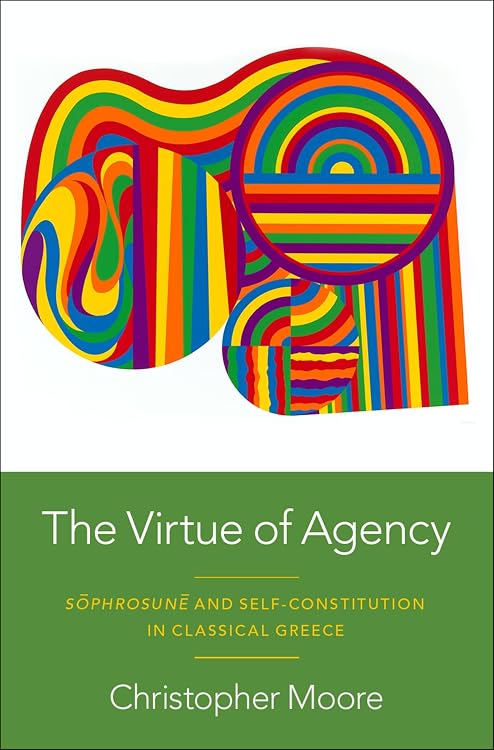
The Virtue of Agency: Sôphrosunê and Self-Constitution in Classical Greece
Self-Constitution Greece: The Virtue of Agency by Christopher Moore examines sôphrosunê in classical Greek thought as a virtue connected to self-discipline, norm-following, and human agency. Its analysis draws on philosophers and literary and historical sources, with additional chapters on earlier poetry and post-classical works.
At a glance
- Interprets sôphrosunê as a commitment to norm-following and a capacity for agency.
- Discusses classical Greek perspectives in Heraclitus, the Sophists, historians, Socrates, Xenophon, and Plato.
- Includes a chapter on earlier poetry, a chapter on the virtue in two gender-sensitive post-classical works, and an appendix on epigraphic material.
Reference price: $120.00
Price checked: Nov 26, 2026
View offerBlack Friday weekExplore the selectionPros and cons
Pros
- Connects a less frequently discussed Greek virtue to questions of responsible action and self-constitution.
- Draws on multiple genres and thinkers rather than focusing solely on philosophical dialogues.
Technical specifications
8 specifications| Publisher | Oxford University Press |
|---|---|
| Publication date | July 7, 2023 |
| Language | English |
| Print length | 408 pages |
| ISBN-10 | 0197663508 |
| ISBN-13 | 978-0197663509 |
| Dimensions | 6.44 x 1.22 x 9.34 inches |
|---|---|
| Weight listed | 1.5 pounds |
Who is it for?
A good fit for
- Readers of ancient Greek ethics and virtue theory.
- Students and scholars interested in agency, self-constitution, and classical Greek literature and philosophy.
Less suited to
- Readers looking primarily for a general introduction to Greek history or a practical self-help guide.
Customer reviews on Amazon
- 5 stars
100% 100% - 4 stars
0% 0% - 3 stars
0% 0% - 2 stars
0% 0% - 1 star
0% 0%
The supplied evidence contains only a single aggregate rating and no written customer feedback. That is too limited to identify reliable strengths, concerns, or reading experiences. The book’s stated focus is specialized, so fit is better judged by interest in Greek ethics, agency, and classical sources than by the rating alone.
Frequently asked questions
What is the book about?
It interprets sôphrosunê, often translated as self-discipline, as a virtue involving norm-following and the formation of responsible agency in classical Greek thought.
Which sources and thinkers does it discuss?
The listing describes analysis of Heraclitus, the Sophists, historians, Socrates, Xenophon, and Plato, alongside poetry, tragedy, historiography, funerary inscriptions, and epigraphic material.
Does the book cover only the classical period?
It deals principally with the classical period, but also includes a chapter on earlier poetry and another on the virtue in two gender-sensitive post-classical works.
Alternative options

The Therapy of Desire: Theory and Practice in Hellenistic Ethics (Princeton Classics)
$15.07
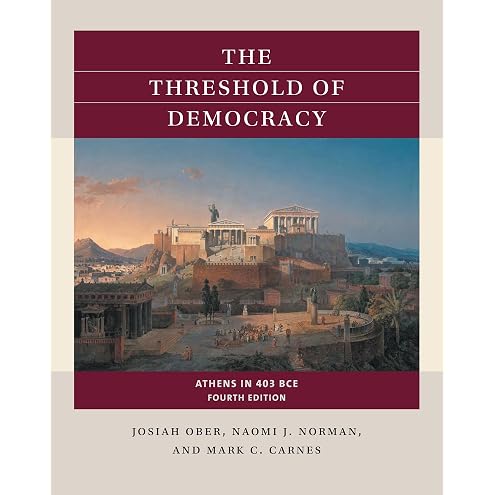
The Threshold of Democracy: Athens in 403 B.C.E. (Reacting to the Past™)
$29.40

The Greeks and the Irrational
$16.95

Hubris: Pericles, the Parthenon, and the Invention of Athens
$25.00

Intimations of Christianity Among the Ancient Greeks (Routledge Classics)
$18.74

The Discovery of the Mind
$15.11
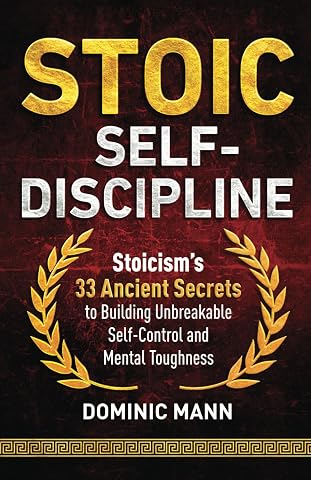
Stoic Self-Discipline: Stoicism’s 33 Ancient Secrets to Building Unbreakable Self-Control and Mental Toughness (Self-Discipline Books)
$19.99
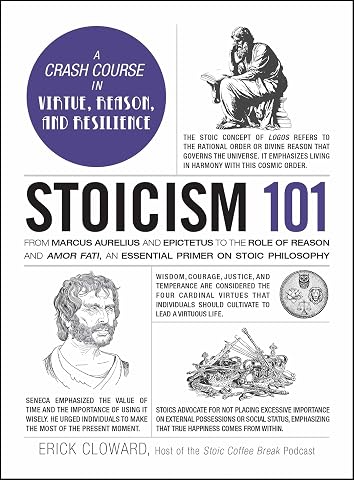
Stoicism 101: From Marcus Aurelius and Epictetus to the Role of Reason and Amor Fati, an Essential Primer on Stoic Philosophy (Adams 101 Series)
$12.50

Immaterial Existence: No Map To Reality
$13.95