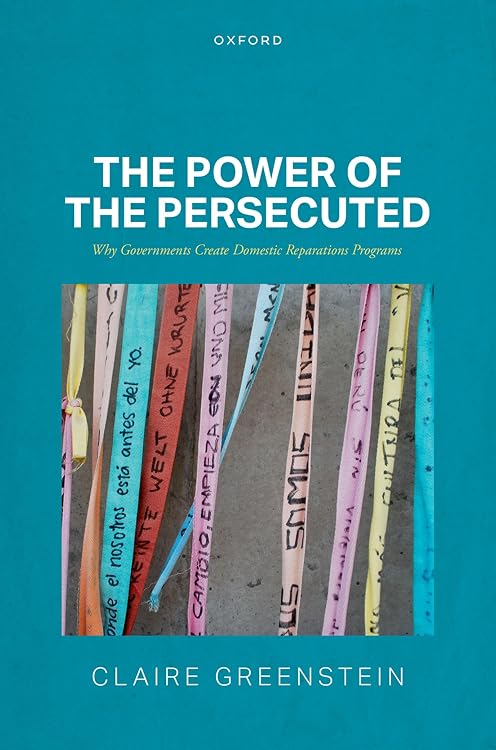
The Power of the Persecuted: Why Governments Create Domestic Reparations Programs
The Power of the Persecuted examines why governments create domestic reparations programs after committing human rights abuses against their own citizens. It argues that organized victim groups’ mobilization and lobbying help explain whether reparations are promised and paid, using case studies of Jewish and Romani Germans and Peruvians affected by the 1980–2000 Armed Internal Conflict.
At a glance
- Uses the political process model to examine how victim-group organization and pressure can affect reparations.
- Presents case studies concerning Jewish Germans, Romani Germans, and Peruvians harmed during the 1980–2000 Armed Internal Conflict.
- The account draws on interview data from five countries and archival sources, according to the listing.
Reference price: $39.99
Price checked: Nov 16, 2026
View offerBlack Friday weekExplore the selectionPros and cons
Pros
- Connects a defined political theory to three specific historical case studies.
- Useful for readers interested in reparations, human rights, political mobilization, and comparative case analysis.
Technical specifications
8 specifications| Publisher | Oxford University Press |
|---|---|
| Publication date | September 18, 2026 |
| Language | English |
| Print length | 208 pages |
| ISBN-10 | 0197849709 |
| ISBN-13 | 978-0197849705 |
| Weight listed | 1 pounds |
|---|---|
| Dimensions | 6.61 x 0.68 x 9.32 inches |
Who is it for?
A good fit for
- Readers studying human rights, reparations policy, social movements, or comparative politics.
- Readers seeking case studies on post-abuse reparations in Germany and Peru.
Less suited to
- Readers looking primarily for a general introduction to human rights law or a broad survey of reparations worldwide.
Frequently asked questions
What question does the book address?
It asks why governments or their successors promise and pay reparations after severe human rights abuses against their own citizens.
Which cases does it examine?
The listing identifies reparations decisions involving Jewish Germans and Romani Germans persecuted by the Nazis, and Peruvians harmed during the 1980–2000 Armed Internal Conflict.
What is the book’s central argument?
It argues that organized victims’ groups can mobilize and pressure formerly abusive states, helping explain the creation and timing of reparations programs.
What research does the listing say it uses?
It describes three detailed case studies, interview data from five countries, and archival sources.