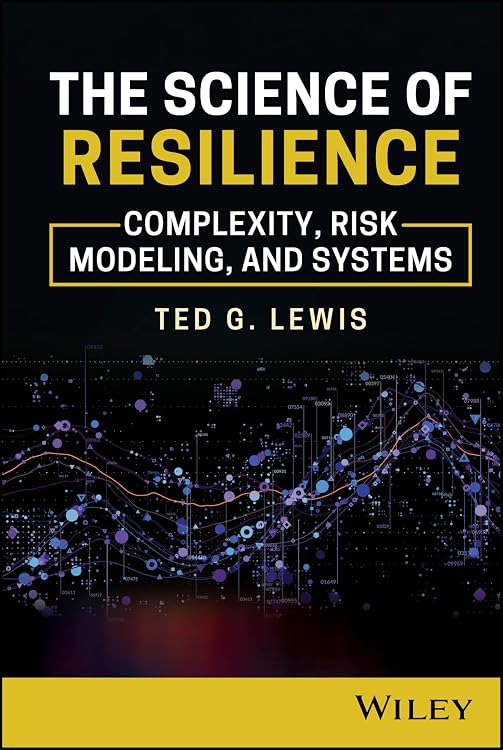
The Science of Resilience: Complexity, Risk Modeling, and Systems
The Science of Resilience explores resilience through complexity theory, risk analysis, and systems thinking. It presents mathematical models and examples across physical, economic, and social systems, with topics including bottlenecks, epidemic modeling, disinformation, and system restructuring.
At a glance
- Applies systems thinking and risk analysis to resilience across physical, economic, and social settings.
- Topics include synchronization, bottleneck analysis, epidemic modeling, social-network disinformation, and phase change.
- The listing describes mathematical models, mini case studies, and hypothetical examples.
Reference price: $123.95
Price checked: Nov 23, 2026
View offerBlack Friday weekExplore the selectionPros and cons
Pros
- Connects resilience concepts to several disciplines and real-world system examples.
- Covers both analysis topics, such as bottlenecks and epidemic modeling, and approaches to restructuring systems.
Technical specifications
9 specifications| Publisher | Wiley |
|---|---|
| Publication date | December 11, 2025 |
| Edition | 1st |
| Language | English |
| Print length | 224 pages |
| ISBN-10 | 1394354924 |
| ISBN-13 | 978-1394354924 |
| Weight listed | 1.06 pounds |
|---|---|
| Dimensions | 6.1 x 0.7 x 9.1 inches |
Who is it for?
A good fit for
- Engineering and systems-design professionals seeking resilience concepts and analytical approaches.
- Complexity science or risk analysis researchers and graduate students in related fields.
- Readers interested in mathematical approaches to how systems respond to disruption.
Less suited to
- Readers seeking a nontechnical introduction, as the listing describes a rigorous mathematical treatment.
Frequently asked questions
What topics does the book cover?
The listing names synchronization, bottleneck analysis, epidemic modeling, social-network disinformation, phase change, and system restructuring.
Does it include mathematical material?
Yes. The listing describes a rigorous mathematical treatment, with models, mini case studies, and hypothetical examples.
Who is the book aimed at?
The listing identifies engineering and systems-design professionals, complexity and risk researchers, graduate students in related fields, and other readers interested in resilience science.
Alternative options
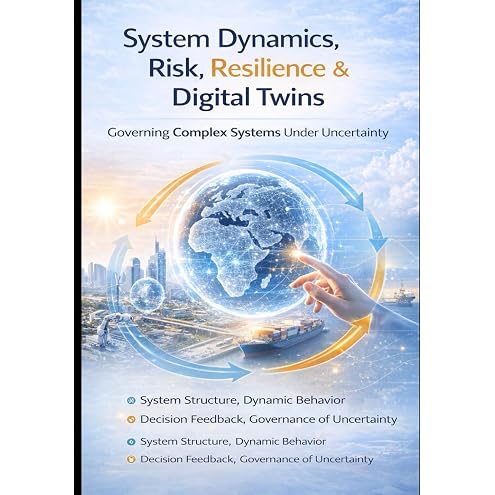
Governing Complexity.: How System Dynamics and Digital Twins Redefine Risk, Resilience, and Decision-Making.
$15.00

Complexity Science: The Study of Emergence
$53.00
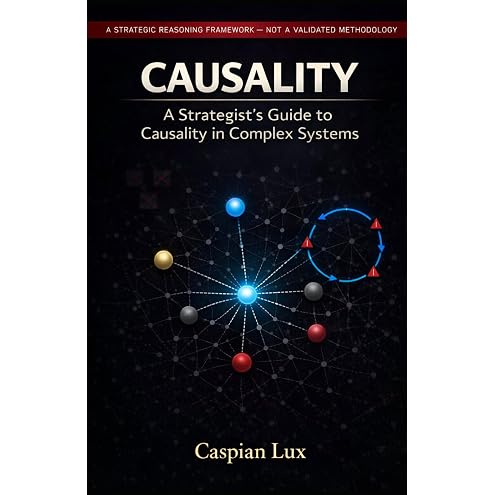
A Strategist’s Guide to Causality in Complex Systems: Moving Beyond Planning to Adaptive Intervention: A Framework for Strategic Reasoning in Uncertain Environments (Cognitive Advantage Series)
$16.90
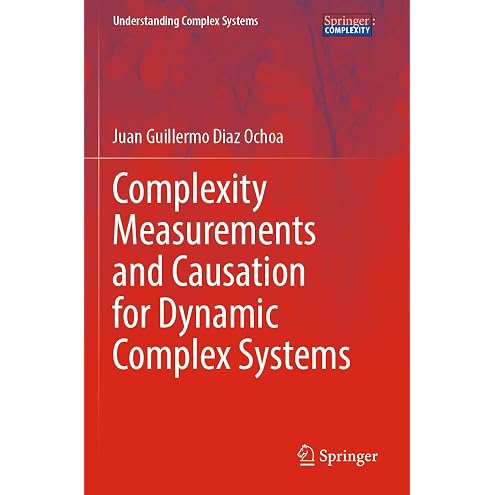
Complexity Measurements and Causation for Dynamic Complex Systems (Understanding Complex Systems)
$59.99
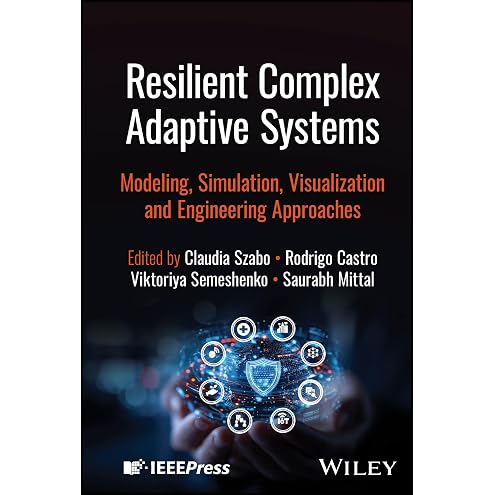
Resilient Complex Adaptive Systems: Modeling, Simulation, Visualization and Engineering Approaches
$142.00
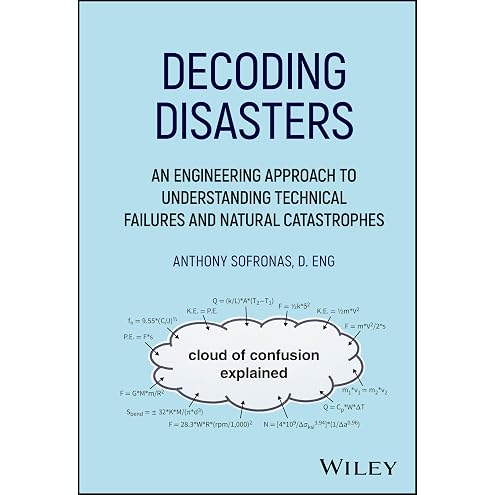
Decoding Disasters: An Engineering Approach to Understanding Technical Failures and Natural Catastrophes
$110.05

Zero Resistance: Superconductivity, From Liquid Helium to the Machines It Made Possible
$17.99

THE BRAIN: Exploring the Latest Research and Neurotechnological Innovations in Cognition and Consciousness (Cutting-Edge Sciences)
$24.99

Journal: Airplane Notebook Journal For Teens and Adults | 120 Pages | Grey Lines | Glossy Cover | 6 x 9 In
$9.99

Airplane Notebook: Notebook Journal For Teens and Adults | 120 Pages | Grey Lines | Glossy Cover | 6 x 9 In
$9.99

Circuit Analysis Made Easy: Ohm's Law Essentials: Worksheets for Basic Electrical Calculations
$16.88

What Every Electrical Engineering Student Must Know: Find Your Area of Focus, Build Your Network, and Design Your Career
$14.99