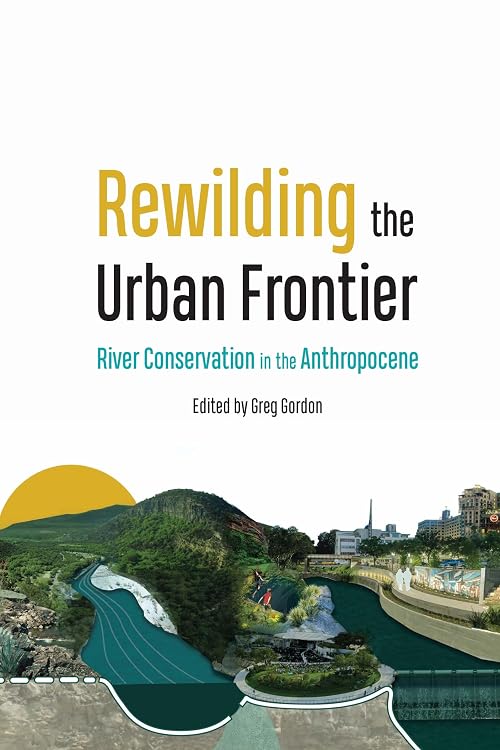
Rewilding the Urban Frontier: River Conservation in the Anthropocene
Rewilding the Urban Frontier examines river conservation in the Anthropocene through the history and future of urban waterways. Its contributors argue that urban river rewilding can support biodiversity while addressing environmental and social inequities.
At a glance
- Considers how urban rivers shifted from essential resources to heavily altered and polluted waterways.
- Discusses the Clean Water Act’s role in cleanup and the continued effects of urban growth on river ecosystems.
- Frames rewilding as a possible way to protect biodiversity and address environmental and social inequities.
Reference price: $65.00
Price checked: Nov 23, 2026
View offerBlack Friday weekExplore the selectionPros and cons
Pros
- Connects river ecology with conservation history and social concerns in urban settings.
- The 344-page length provides room for a multi-contributor discussion.
Technical specifications
8 specifications| Publisher | University of Nebraska Press |
|---|---|
| Publication date | August 1, 2024 |
| Language | English |
| Print length | 344 pages |
| ISBN-10 | 1496230612 |
| ISBN-13 | 978-1496230614 |
| Weight listed | 1.4 pounds |
|---|---|
| Dimensions | 6 x 1 x 9 inches |
What to know before buying
- The book’s argument is that urban river rewilding can help avoid further biodiversity loss and address inequities, not a guarantee of those outcomes.
Who is it for?
A good fit for
- Readers interested in river conservation, urban ecology, and environmental history.
- Students or practitioners exploring how urban growth affects wildlife corridors and river ecosystems.
Less suited to
- Readers looking for a field guide, technical restoration manual, or a focused study of a single river, which the supplied description does not establish.
Customer reviews on Amazon
- 5 stars
100% 100% - 4 stars
0% 0% - 3 stars
0% 0% - 2 stars
0% 0% - 1 star
0% 0%
The listing shows one global rating, which is too limited to establish a reliable pattern of customer opinion. It does not provide review comments to explain the rating, so buyers should assess the book from its stated subject and intended scope.
Frequently asked questions
What is this book about?
It discusses the changing relationship between people and urban rivers, and considers whether rewilding can help conserve biodiversity and address environmental and social inequities.
Does it focus on a specific river?
The supplied description presents a broad discussion of urban rivers in America and does not identify a single river as the book’s focus.
How long is the book?
The listing states a print length of 344 pages.
Alternative options
In the Spirit of Wetlands: Reviving Habitat in the Illinois River Watershed
$19.92
Urban Regions: Ecology and Planning Beyond the City
$77.44
Resilience and Riverine Landscapes
$150.00
Wisdom of the Marsh: Modeling Restoration in the Montezuma Wetlands (New York State Series)
$22.10
Reconnecting the City: The Historic Urban Landscape Approach and the Future of Urban Heritage
$87.50
Connected Lands: New Perspectives on Ecological Networks Planning (UNIPA Springer Series)
$85.76

Trees of the California Landscape: A Photographic Manual of Native and Ornamental Trees
$59.96
A Guide to Finding Birds Along the Illinois River Flyway
$14.95
Deep Time in the Mono Lake Basin: Nature and History over the Last 10,000 Years
$24.76

Introduction to California Chaparral (California Natural History Guides) (Volume 90)
$26.95
Cracked: The Future of Dams in a Hot, Chaotic World
$13.30

Introduction to Water in California
$25.05