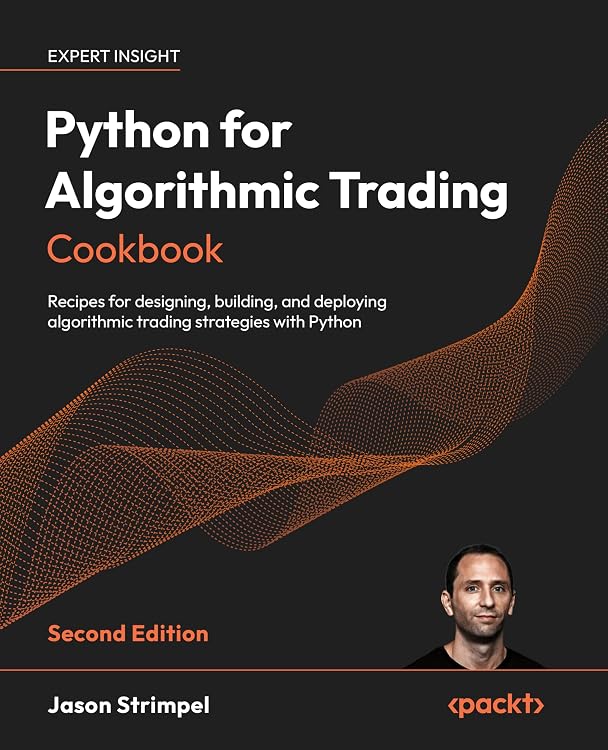
Python for Algorithmic Trading Cookbook, 2nd Edition
Edition: Python for Algorithmic Trading Cookbook is a hands-on guide to building a research, backtesting, risk-review, and execution workflow with Python. It covers tools including pandas, Polars, DuckDB, VectorBT, Zipline Reloaded, and the Interactive Brokers API, while assuming some familiarity with trading and Python.
At a glance
- Recipes span acquisition and analysis of equities, options, and futures data through strategy evaluation and live-trading workflows.
- Covers factor research, walk-forward analysis, backtesting, and risk-aware performance review.
- The listed audience should have basic Python familiarity, exposure to trading or investing, and basic knowledge of pandas and NumPy.
- The product details identify this as the second edition, with 536 pages.
Reference price: $49.99
Price checked: Nov 19, 2026
View offerBlack Friday weekExplore the selectionOften bought together
Pros and cons
Pros
- Connects data handling, alpha research, backtesting, performance analysis, and execution in one trading-focused workflow.
- Names practical tools and frameworks for both research and broker API execution.
- Includes subjects such as walk-forward analysis and risk review rather than focusing on strategy code alone.
Cons
- Not positioned as a first Python or trading primer, since the stated audience should already know Python basics and have some trading exposure.
Technical specifications
16 specifications| Edition | 2nd ed. |
|---|---|
| Publisher | Packt Publishing |
| Publication date | July 10, 2026 |
| Language | English |
| Print length | 536 pages |
| ISBN-10 | 1806662035 |
| ISBN-13 | 978-1806662036 |
| Weight listed | 2.01 pounds |
|---|---|
| Dimensions | 7.5 x 1.21 x 9.25 inches |
| Market data sources | OpenBB and FMP |
|---|---|
| Data processing and storage | pandas, Polars, Parquet, DuckDB, and ArcticDB |
| Visualization | Matplotlib, Seaborn, and Plotly Dash |
| Research methods and libraries | PCA, regression, Fama-French models, SciPy, and statsmodels |
| Backtesting frameworks | VectorBT and Zipline Reloaded |
| Risk and performance analysis | Alphalens Reloaded and PyFolio |
| Execution connection | Interactive Brokers API |
What to know before buying
- The content describes connection to the Interactive Brokers API and live-trading workflows, but does not establish that examples guarantee profitable results or are suitable for any particular account or trading setup.
Who is it for?
A good fit for
- Python users with basic pandas and NumPy familiarity who want recipe-based quantitative trading workflows.
- Traders or investors interested in moving from discretionary analysis toward systematic research and strategy testing.
- Readers who want examples involving financial datasets, factor models, backtesting, risk evaluation, or broker API execution.
Less suited to
- Readers seeking a beginner introduction to Python syntax or trading fundamentals.
- Buyers seeking trading advice, guaranteed outcomes, or proof that a tested strategy will perform well in live markets.
Customer reviews on Amazon
- 5 stars
74% 74% - 4 stars
16% 16% - 3 stars
0% 0% - 2 stars
10% 10% - 1 star
0% 0%
Aggregate customer ratings lean positive, with most in the top category, but a smaller share are lower ratings, including some two-star ratings. Without review comments, the reasons are unknown. These ratings do not establish how well the book’s specific Python workflows, tools, or trading examples suit a particular reader.
Frequently asked questions
What background does the book expect?
The listing says readers should have some exposure to investing or trading, basic Python syntax familiarity, and basic knowledge of pandas and NumPy.
Which parts of a trading workflow does it cover?
The described recipes cover financial data acquisition and processing, visualization, factor research, backtesting, risk and performance evaluation, and execution workflows through the Interactive Brokers API.
Does the book cover live trading?
The listing describes connecting to the Interactive Brokers API to stream ticks, manage orders, retrieve portfolio state, and monitor live-trading workflows. This describes the subject matter, not a guarantee of results.
What edition and length are listed?
The product details identify the book as the 2nd edition in English, with a print length of 536 pages.
Alternative options
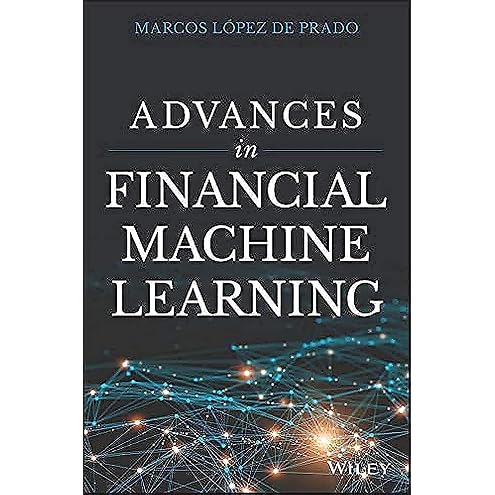
Advances in Financial Machine Learning
$24.71
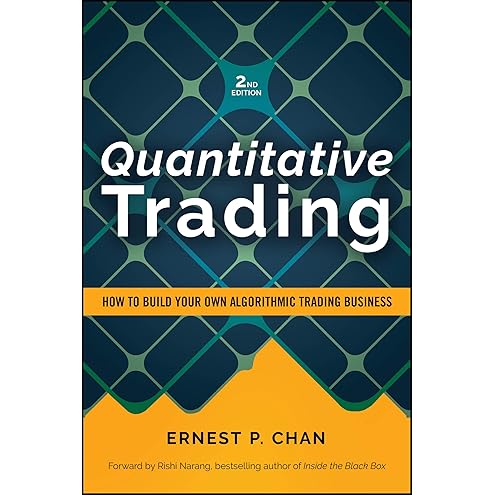
Quantitative Trading: How to Build Your Own Algorithmic Trading Business, Revised Edition (Wiley Trading)
$20.79
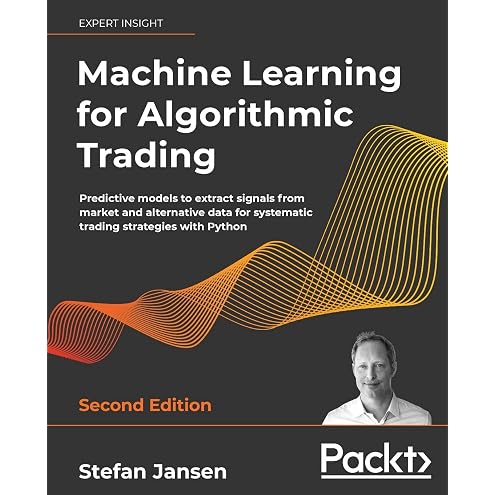
Machine Learning for Algorithmic Trading: Predictive models to extract signals from market and alternative data for systematic trading strategies with Python
$47.60
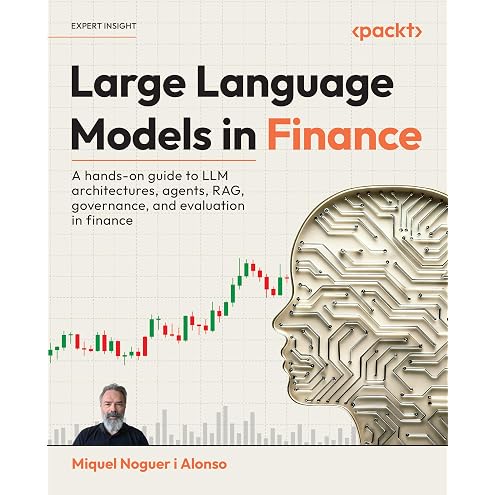
Large Language Models in Finance: A hands-on guide to LLM architectures, agents, RAG, governance, and evaluation in finance
$47.49
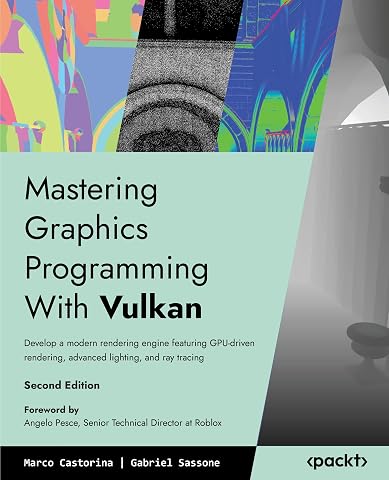
Mastering Graphics Programming With Vulkan: Develop a modern rendering engine featuring GPU-driven rendering, advanced lighting, and ray tracing
$28.49
Multi-Agent AI Engineering: Design, build, and operate AI systems that think and act as coordinated teams
$49.63
Grokking Statistics: A friendly guide for beginners
$59.99
Building Claude Skills: Turn repeatable work into reusable Claude Skills
$22.55
The Practical Network Engineer's Guide: Master routing, network diagnostics, and troubleshooting
$37.99

Agentic Coding with Claude Code: The everyday developer's guide to agentic coding with Claude Code
$44.99
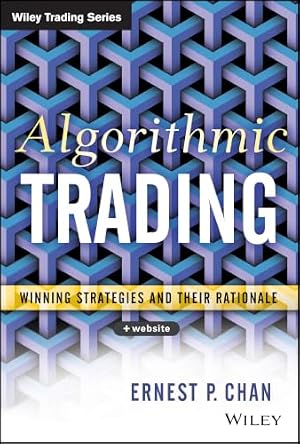
Algorithmic Trading: Winning Strategies and Their Rationale (Wiley Trading)
$50.48

Build a Reasoning Model (From Scratch)
$47.99