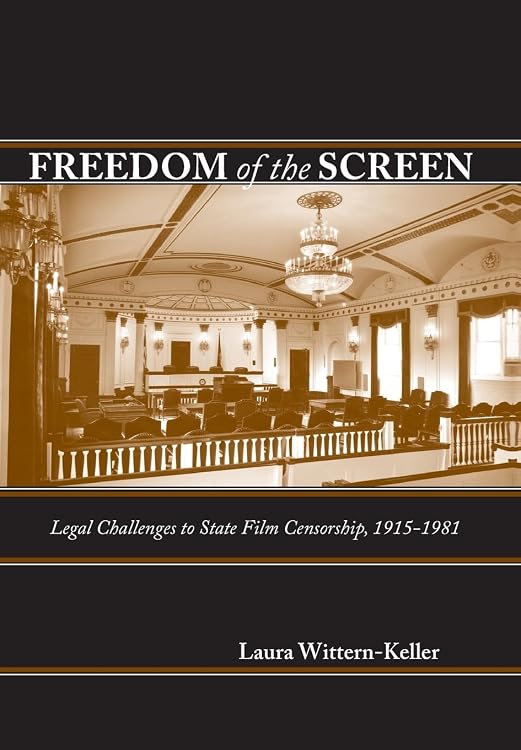
Freedom of the Screen: Legal Challenges to State Film Censorship, 1915–1981
Freedom of the Screen examines legal challenges to state and local film censorship in the United States. Laura Wittern-Keller traces court battles over censorship and free expression, including landmark cases and the effects of the Production Code. The account is positioned for readers interested in film history, First Amendment law, and censorship.
At a glance
- Covers more than five decades of U.S. film censorship disputes, from state and local restrictions to national court cases.
- Discusses landmark cases involving The Miracle, La ronde, and Lady Chatterley's Lover.
- Examines the Production Code alongside legal challenges by independent film distributors and exhibitors.
Reference price: $40.00
Price checked: Nov 27, 2026
View offerBlack Friday weekExplore the selectionPros and cons
Pros
- Connects film history with First Amendment and censorship law through a focused historical account.
- The stated 356-page length offers room for a broad chronology of disputes and court cases.
Technical specifications
9 specifications| Publisher | University Press of Kentucky |
|---|---|
| Publication date | January 11, 2008 |
| Language | English |
| Print length | 356 pages |
| ISBN-10 | 0813124514 |
| ISBN-13 | 978-0813124513 |
| Reading age | 18 years and up |
| Weight listed | 1.64 pounds |
|---|---|
| Dimensions | 6.1 x 1.18 x 9.25 inches |
Who is it for?
A good fit for
- Readers of film and media history interested in the legal development of artistic expression.
- Students and researchers exploring censorship, First Amendment history, or entertainment law.
Less suited to
- Readers seeking a general overview of contemporary film or current censorship law rather than a historical study.
Customer reviews on Amazon
- 5 stars
100% 100% - 4 stars
0% 0% - 3 stars
0% 0% - 2 stars
0% 0% - 1 star
0% 0%
The listing shows uniformly five-star aggregate ratings, but the sample is very small and contains no written customer feedback. That gives little basis for judging the book's clarity, depth, or usefulness beyond the stated historical and legal scope.
Frequently asked questions
What period does the book cover?
Its title spans 1915–1981. The description discusses censorship disputes and legal challenges across more than five decades.
Which cases are discussed?
The description names cases concerning The Miracle (1948), La ronde (1950), and Lady Chatterley's Lover (1955).
Does the book cover the Production Code?
Yes. The description discusses the industry's self-censoring Production Code and its role in the history of film expression.