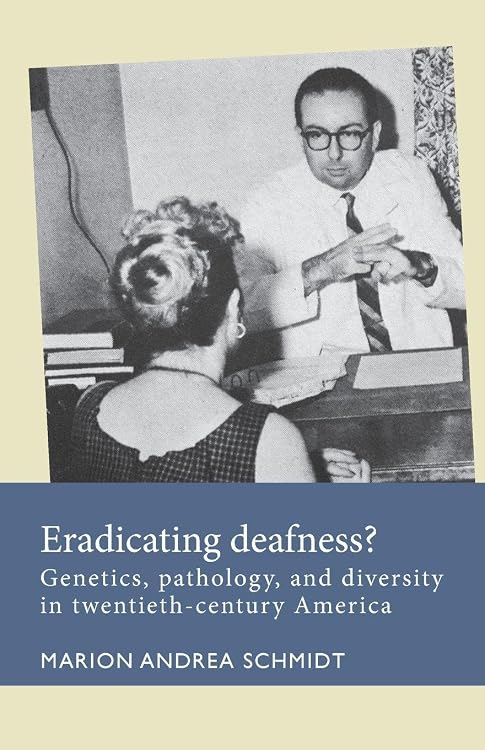
Eradicating Deafness?: Genetics, Pathology, and Diversity in Twentieth-Century America
Pathology Twentieth-Century: Eradicating Deafness? examines how American heredity research shifted from attempts to prevent deafness toward approaches that recognized deafness as cultural diversity. It connects the history of genetics and eugenics with deaf and disability history, including changing relationships between professionals and signing deaf communities.
At a glance
- Traces changing American views of deafness from hereditary pathology to cultural diversity.
- Discusses eugenics, genetics, schools for the deaf, medical ethics, and reproductive rights.
- Covers cooperative projects between professionals and local signing deaf communities from the 1950s onward.
Reference price: $29.95
Price checked: Nov 16, 2026
View offerBlack Friday weekExplore the selectionPros and cons
Pros
- Connects scientific and medical history with deaf and disability history.
- The stated 216-page length offers a focused treatment of a broad historical subject.
Technical specifications
8 specifications| Publisher | Manchester University Press |
|---|---|
| Publication date | October 29, 2024 |
| Language | English |
| Print length | 216 pages |
| ISBN-10 | 1526182394 |
| ISBN-13 | 978-1526182395 |
| Weight listed | 9.8 ounces |
|---|---|
| Dimensions | 5.43 x 0.46 x 8.5 inches |
Who is it for?
A good fit for
- Readers of deaf and disability history, genetics, or the history of eugenics.
- Students and researchers interested in medical ethics, reproductive rights, and cultural diversity.
Customer reviews on Amazon
- 5 stars
100% 100% - 4 stars
0% 0% - 3 stars
0% 0% - 2 stars
0% 0% - 1 star
0% 0%
The listing shows a single global rating, which is too limited to establish a dependable pattern of reader experience. No written customer feedback is supplied, so it does not indicate which aspects readers valued or criticized.
Frequently asked questions
What historical period and place does the book cover?
It focuses on twentieth-century America and changing approaches to deafness, heredity, and disability.
What subjects does the book discuss?
The listing describes coverage of genetics, eugenics, schools for the deaf, medical ethics, reproductive rights, and relationships between professionals and signing deaf communities.
How long is the book?
The listed print length is 216 pages.